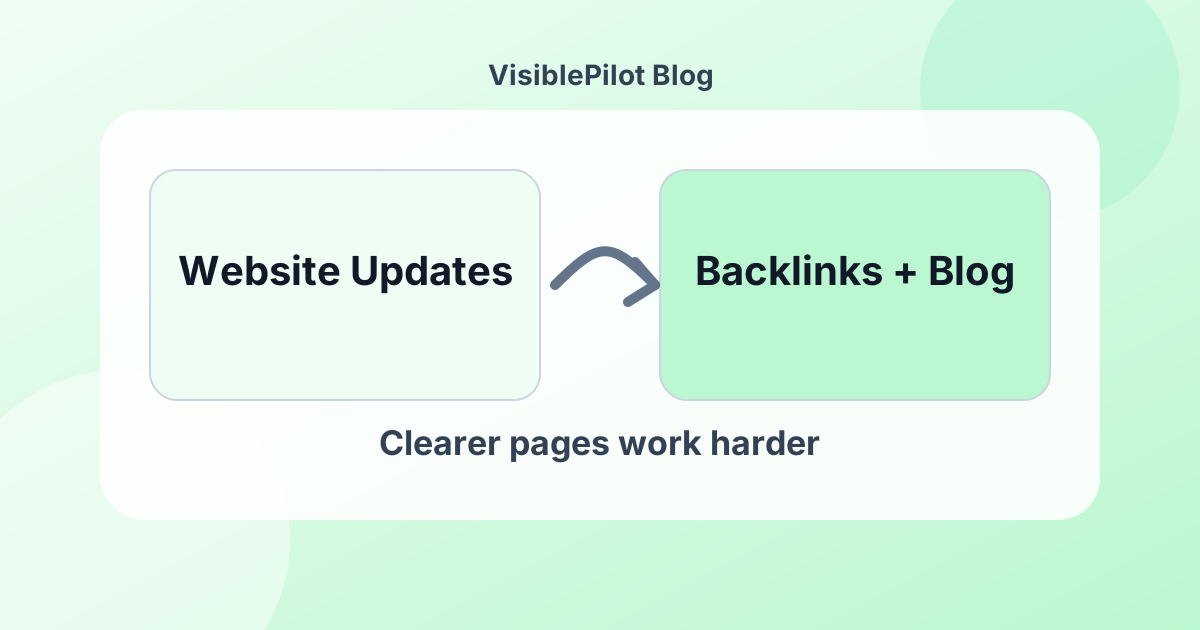
Backlinks and blog articles work better when the website they point to makes sense.
If a source page links to your website, but the target page is confusing, old, thin or hard to trust, the backlink is not doing as much useful work as it could.
This is why website updates matter.
A website update does not always mean a full redesign. Sometimes it means small improvements that make your pages clearer.
Backlinks need useful target pages
A backlink is a link from another website to your website.
But the quality of the target page still matters.
If a backlink points to a weak page, the visitor may not understand what to do next.
A useful target page should usually have:
- a clear heading;
- a clear service or product explanation;
- a location or service area if relevant;
- readable sections;
- useful images or alt text;
- contact or checkout path;
- trust signals;
- no broken layout.
Backlinks help people and systems find the page. The page still needs to be worth finding.
Blog articles need a website that connects the ideas
Blog articles can explain services, answer customer questions and support search discovery.
But a blog article should connect to the right service page.
For example:
- an article about garden storage should connect to a garden storage service page;
- an article about email campaign ideas should connect to an email campaign service;
- an article about backlinks should connect to the backlink plan page.
If the service page is weak, the blog article has nowhere strong to point.
Small website updates help connect the pieces.
Website updates can improve clarity quickly
A useful update might be simple:
- rewrite a confusing headline;
- add a clear call to action;
- add a short service summary;
- update old pricing wording;
- fix image alt text;
- add internal links;
- add a FAQ section;
- remove outdated claims;
- make a page easier to scan.
These changes are not glamorous, but they can make the page easier to understand.
Why old pages quietly hurt trust
A page does not need to be broken to cause problems.
It might simply feel neglected.
Common issues include:
- old dates;
- missing service details;
- vague headings;
- empty sections;
- blurry images;
- no clear next step;
- outdated offers;
- broken links;
- missing contact path.
A customer may not complain. They may just leave.
Search engines and AI tools also rely on public page context. If a page is unclear, thin or inconsistent, it gives less useful context.
How updates support backlinks
Website updates can make backlink work more practical.
Before creating placements, VisiblePilot may check:
- which target pages are strongest;
- which pages need clearer headings;
- which pages need better descriptions;
- whether a page has a sensible URL;
- whether the page has obvious customer value;
- whether the page can receive a contextual link naturally.
A backlink should point to a page that deserves attention.
How updates support blog articles
Blog articles work better when they can link to clear service pages.
For example, a blog article about “how weekly blog articles help customers understand your business” should link to a clear blog article service page.
If the service page has no explanation of the plan, the blog article is less useful.
A small update can fix that.
How updates support ads
Ads send visitors to a page.
If that page is not ready, paid traffic can be wasted.
Before running ads, a business may need:
- a stronger offer section;
- a better contact path;
- clearer service wording;
- faster scanning;
- basic trust signals;
- a page that works on mobile.
This is why website updates often support Google Ads and Meta Ads.
What VisiblePilot means by website updates
VisiblePilot website updates are small, scoped improvements.
They can include:
- wording updates;
- headings;
- internal links;
- simple layout suggestions;
- image alt text;
- small content additions;
- conversion clarity;
- service page cleanup.
They do not automatically include full redesigns, complex development, migrations or destructive edits.
Bigger work should be scoped separately.
Why proof matters for updates
A website update should be reportable.
A useful proof report can show:
- page reviewed;
- issue found;
- update suggested;
- update approved;
- update completed if access exists;
- screenshot or status;
- next step.
If the update is only a recommendation, the report should say that.
If the update is completed, the report should show where.
The simple rule
Backlinks and blog articles bring attention to pages.
Website updates make those pages clearer when the attention arrives.
The three services work together:
- backlinks widen discovery;
- blog articles explain topics;
- website updates improve the destination.
Start with the page that matters most
You do not need to update every page at once.
A good first step is to choose one important target page and make it clearer.
Then backlinks and blog articles have a stronger page to support.
VisiblePilot can help identify the first page, suggest updates, and show proof of what changed or what still needs approval.