

AI visibility audit cost commonly falls between $99 and $1,500 for published fixed-price, standalone services. A lightweight automated check may be free or inexpensive, while a comprehensive multi-brand, multi-market or enterprise audit is usually quoted separately. If you also need continuous tracking, current software plans start around $29 per month and can exceed $500 per month as prompt volume, engines and projects increase.
Budget answer: pay for the smallest audit that produces verifiable evidence and a prioritized fix list. A cheap score without raw results can cost more later than a focused audit that shows exactly what was tested, what failed and what to do next.
The short answer to “AI visibility audit cost”
There is no single market price because the label covers very different deliverables. One provider may run five prompts across three answer engines and return a short PDF. Another may test hundreds of prompts, inspect crawler access, compare competitors, review source citations, segment results by country and present an implementation roadmap.
| Audit option | Indicative cost | Best for | What to verify |
|---|---|---|---|
| DIY or automated check | Free to about $100 | One small site, initial triage | Limits on pages, prompts, engines and evidence export |
| Focused professional audit | About $100–$500 | One brand and a narrow prompt set | Named deliverables, screenshots, raw outputs and action list |
| Comprehensive standalone audit | About $500–$1,500 | Competitor comparison and deeper technical/content review | Repeat tests, scoring logic, false-positive review and presentation |
| Enterprise or multi-market audit | Custom quote | Large sites, many countries, brands or stakeholders | Data access, integrations, governance and implementation support |
| Ongoing monitoring software | Roughly $29–$500+ per month | Tracking visibility after the audit | Prompt volume, model coverage, refresh rate and project limits |
These bands are not a promise that every vendor fits neatly inside them. They are a practical budgeting guide based on public offers. For example, OtterlyAI lists monitoring from $29 per month, Peec AI publishes brand plans from about $95 to $495 per month, and Scrunch lists plans starting at $250 per month. Published audit services range from a narrow $99 check to packages around $497–$997, while agency audit guidance commonly places fuller standalone work between $250 and $1,500.
What can be measured reliably—and what remains platform-dependent
A useful audit separates observable facts from outcomes nobody can guarantee. It can reliably test robots directives, HTTP responses, redirects, canonical and index controls, rendered content, structured data, internal discovery paths and whether meaningful page copy is available without a browser-only interaction. It can also record what selected AI systems returned for a defined prompt set at a specific time.
What it cannot reliably promise is a permanent citation, recommendation or share-of-voice score. AI answers can vary by model version, location, account context, freshness and sampling behavior. A good auditor therefore repeats important prompts, records dates and settings, preserves screenshots or exports, and labels conclusions with the right confidence level.
Factors that change the answer
- Website size: ten priority URLs take less time to inspect than a catalogue with thousands of templates.
- Prompt coverage: buyer, comparison, problem and branded prompts multiply the number of runs.
- Platforms and markets: ChatGPT, Gemini, Perplexity, Copilot and Google AI experiences do not behave identically.
- Competitor depth: explaining why another source appears requires citation and content comparisons, not just mention counting.
- Technical access: CDN, WAF, rendering or log-analysis work can add investigation time.
- Freshness and repeatability: repeated tests are more useful than one snapshot but consume more credits and review time.
- Implementation support: an audit diagnoses; content rewrites, schema changes, development and digital PR are separate work.

Practical examples with contrasting site conditions
Small service website
A 20-page consultancy wants to know why it is absent from three high-intent prompts. A focused audit might review five priority pages, crawler access, entity clarity, citations and a small competitor set. This can fit near the lower end because the question is narrow and the evidence set is manageable.
Growing ecommerce website
A retailer has hundreds of product and category pages, multiple templates and frequently changing stock. The audit must sample templates, test commercial prompts, check product facts, compare citations and separate a template defect from a page-specific issue. Expect a mid-range or custom quote.
Enterprise, agency or multi-region portfolio
A group operating several brands across countries needs permissions, prompt governance, regional testing, competitor segmentation, repeat runs, stakeholder reporting and perhaps API or analytics integration. The largest cost is usually not the dashboard; it is creating trustworthy coverage and turning findings into coordinated work.
A simple diagnostic you can run today
- Choose five real questions a prospect asks before buying, including one comparison and one problem-based query.
- Run each prompt twice in two relevant AI search experiences. Record date, market, answer, brands mentioned and cited sources.
- Check whether your best matching page is crawlable, indexable, internally linked and useful in the returned HTML.
- Compare the cited competitor page with yours for specificity, evidence, freshness, entity clarity and direct answer quality.
- Write one finding as: observed evidence → likely explanation → smallest testable fix → retest date.
Pass condition: you can connect each recommendation to a URL, prompt, response, screenshot or technical check. If the audit only produces a proprietary score, ask how that score was calculated and request the underlying observations.
How to interpret the result without overclaiming causation
Suppose a competitor appears in four of ten runs and your brand appears in one. That establishes an observed visibility gap for the tested conditions. It does not prove that one schema field, keyword or file caused the difference. Authority, content fit, retrieval freshness and model behavior may all contribute.
Treat the audit as a ranked set of hypotheses. Fix deterministic barriers first: blocked crawlers, error responses, missing core content, conflicting canonicals, thin commercial pages and inconsistent entity information. Then improve answer quality and evidence. Retest the same prompt set after changes, while accepting that movement can be noisy.
Evidence and screenshots a worthwhile audit should include
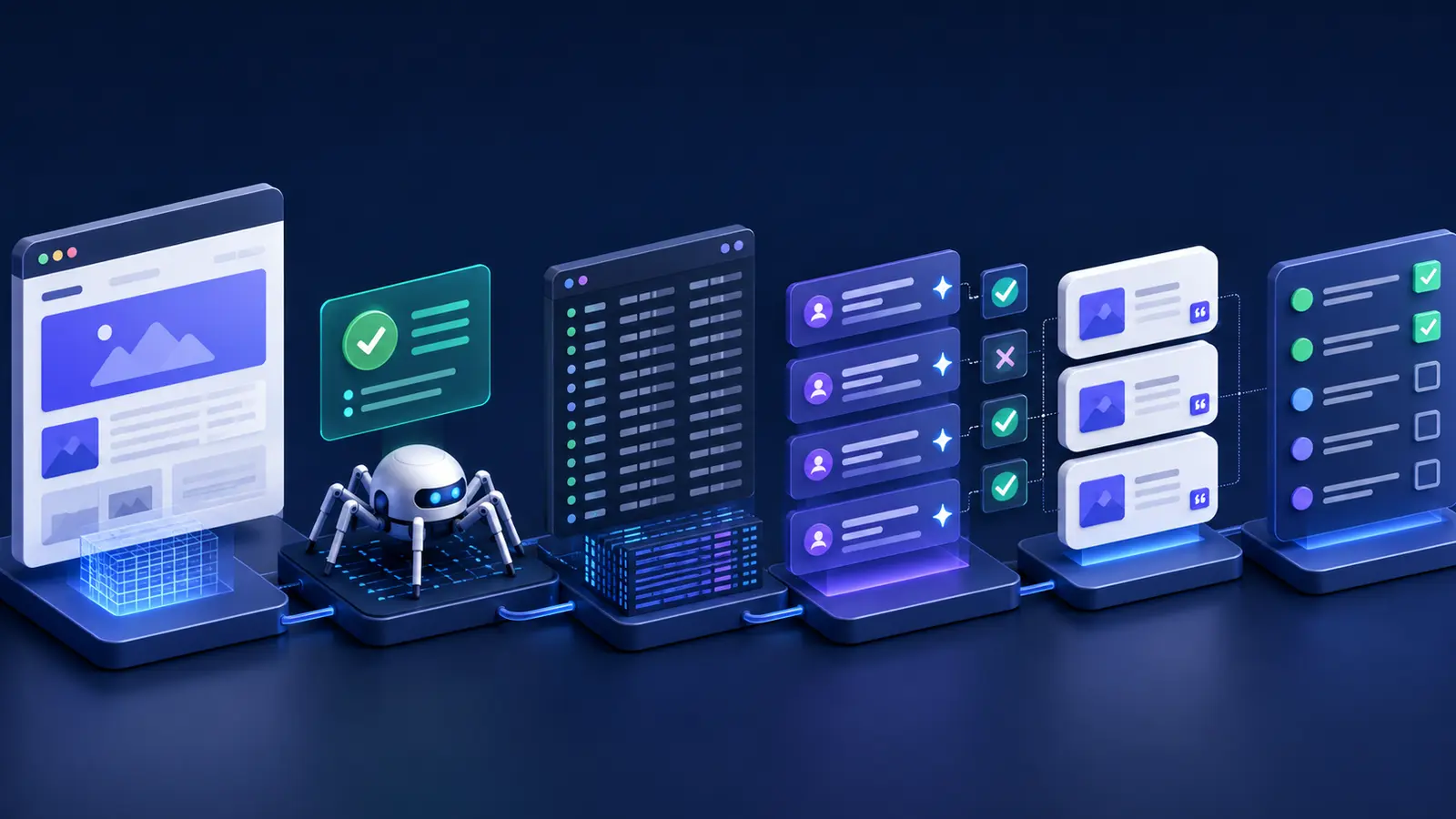
- Coverage: URLs, prompts, platforms, countries, devices and dates included.
- Repeatability: which tests were repeated and how variable answers were handled.
- Raw evidence: screenshots, exports, HTTP checks, rendered content and relevant log events.
- Scoring logic: category weights, pass/fail definitions and known limitations.
- False-positive review: human validation of automated findings before recommendations.
- Workflow fit: owners, priority, expected effort and a retest method for each action.
- Total cost: audit fee, monitoring subscription, implementation hours and ongoing reporting.
Common interpretation mistake
The most common mistake is choosing by dashboard polish or one proprietary score. A score can help prioritize, but it is not an AI-platform ranking factor and it can hide weak coverage. Compare audits by the questions they can answer: Which URL was tested? What response was observed? Can the issue be reproduced? Is the fix within your control? What evidence would show improvement?
Before buying, review what an AI visibility audit should include and compare the engagement with our guide to choosing an AI visibility audit solution. This keeps price tied to scope rather than a vague promise.
Frequently asked questions
Is a free AI visibility audit enough?
It is enough for initial triage if it reveals its coverage and evidence. It is not enough for a high-stakes roadmap when it tests only a homepage, a few prompts or one platform.
Does the audit price include implementation?
Usually not. Confirm whether the quote includes only findings or also content updates, technical fixes, schema, outreach, analytics setup and retesting.
How often should an AI visibility audit be repeated?
Run a baseline before major work, retest after important fixes, and schedule broader reviews when products, templates, markets or answer-engine behavior changes. Continuous monitoring may suit active categories, but it should not replace technical validation.
Can an audit guarantee ChatGPT or Gemini citations?
No credible audit can guarantee selection by an independent AI platform. It can identify access barriers, content weaknesses and evidence gaps, then measure whether results change under defined tests.
What should I ask for before accepting a quote?
Ask for the exact URLs, prompts, engines, markets, competitors, repeat runs, evidence format, scoring method, deliverables, implementation boundary and retest policy. Those details explain the price better than the report’s page count.
Next step: join the Visible Pilot early-access list
Visible Pilot is being built to identify the technical, content and AI-search issues that stop websites from being discovered, understood and cited. Join the Visible Pilot early-access list to hear when the diagnostic becomes available.
Pricing references
- OtterlyAI pricing
- Peec AI pricing
- Scrunch pricing
- Optimum Web AI visibility audit
- Ypsilon AI visibility audit packages
Pricing checked on 6 August 2026. Providers can change prices, limits and deliverables; verify current terms before purchasing.