
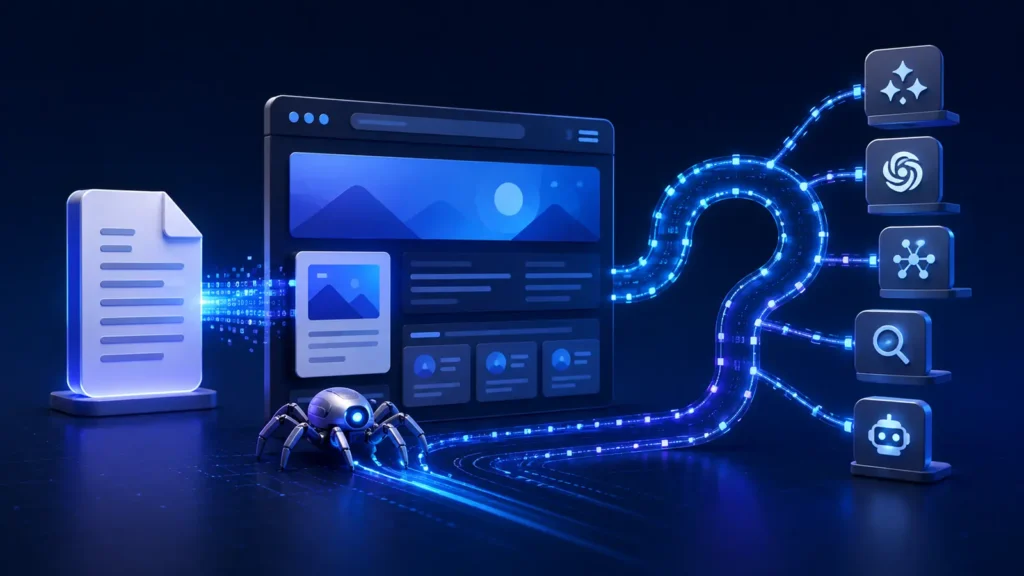
If you are asking “does llms.txt improve AI visibility?”, the honest answer is: possibly in limited machine-reading workflows, but not as a proven ranking switch. An /llms.txt file can give systems a concise map of your most useful pages. It cannot force an AI platform to crawl, index, trust, quote, or cite them. Treat it as an optional discoverability aid to test after access, content quality, and authority are already in good shape.
Quick answer: llms.txt may help a compatible tool understand a site faster, especially when the file links to clean, useful resources. No major search platform currently documents it as a guaranteed AI visibility or citation factor. Measure the result instead of assuming it.
The short answer to “does llms.txt improve AI visibility?”
The llms.txt proposal describes a Markdown file placed at the root of a website. It contains a site or project name, a short explanation, and selected links to important material. That structure can reduce navigation noise and make key resources easier for an LLM-enabled tool to locate when the tool deliberately reads the file.
That is a plausible usability benefit, not evidence of a universal ranking benefit. The proposal does not define how every AI product must process the file, and adoption varies. Google says its AI search features use established Search fundamentals and require no special AI-only optimization. OpenAI publicly documents crawler controls through robots.txt, not llms.txt as a visibility requirement. Therefore, a missing llms.txt file is not proof of an AI visibility problem, and adding one is not proof of a fix.
What can be measured reliably—and what remains platform-dependent
You can reliably measure whether https://example.com/llms.txt returns HTTP 200, uses valid Markdown, stays accessible without login or script execution, and links to canonical pages that also return healthy responses. You can review server logs to see whether a crawler or user-triggered agent requested the file. You can also repeat a fixed set of AI-search prompts and record mentions, links, citations, and referral traffic.
What you cannot reliably infer from one result is causation. AI answers change with the prompt, date, product mode, available sources, and the platform’s own retrieval system. A crawler visit does not prove indexing. Indexing does not guarantee selection. Selection for one answer does not create a permanent ranking.
Important distinction: robots.txt controls crawler access for agents that honor it. llms.txt is a proposed content guide. It cannot override authentication, a firewall block, a noindex directive, a broken canonical, or a weak source page.
Factors that change the answer
- Access: the llms.txt file and every linked page must be publicly reachable and consistently return the intended content.
- Freshness: outdated product details, prices, policies, or removed links make the file less useful.
- Authority: a tidy index does not create expertise, reputation, references, or firsthand evidence.
- Content fit: linked pages still need to answer the user’s exact question clearly and completely.
- Model behavior: each platform chooses its own crawling, retrieval, and citation methods, which can change over time.
These factors explain why two sites can publish equally valid files and see different outcomes. The file is only one surface in a much larger discovery and selection system.
Practical examples with contrasting site conditions
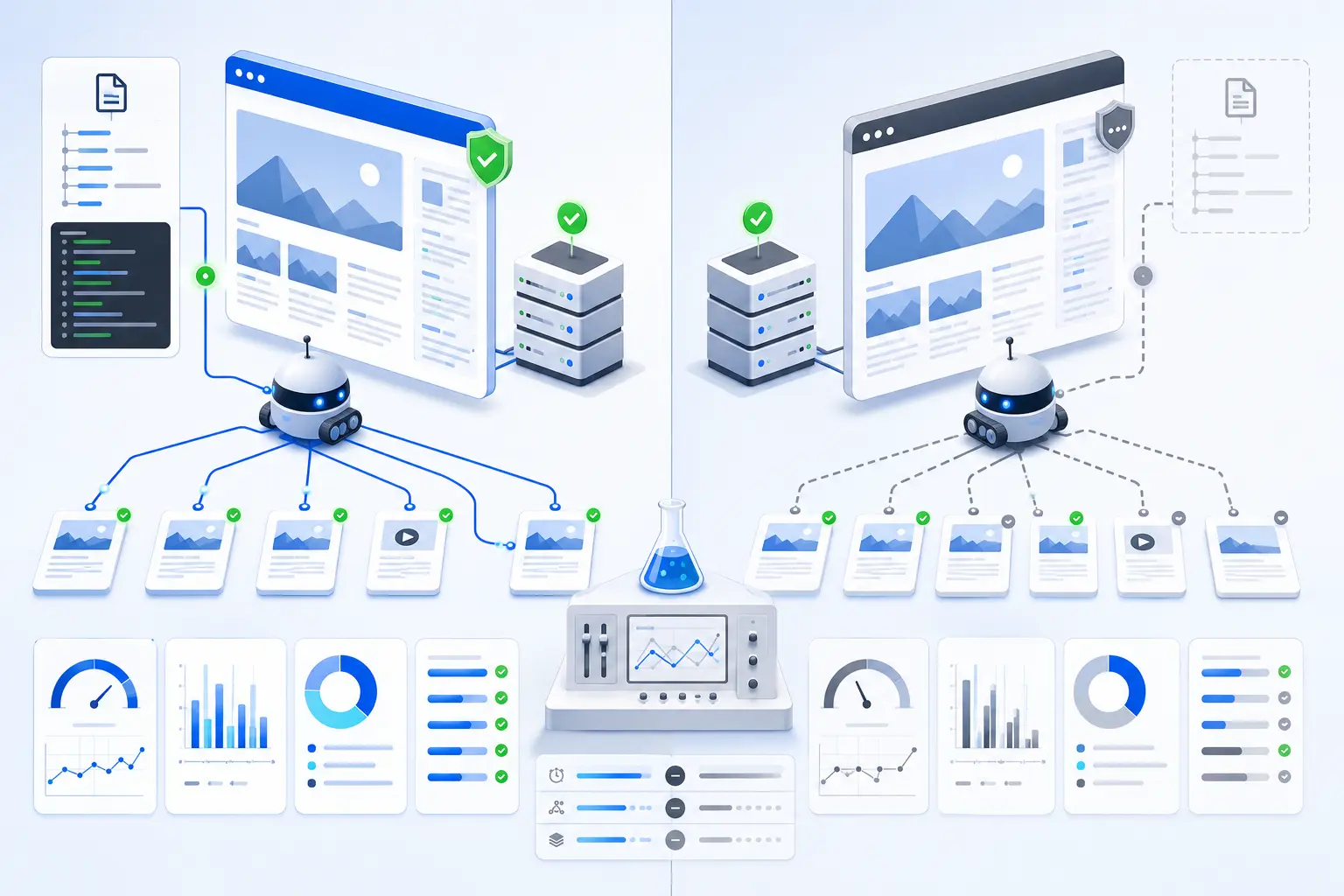
Site A publishes a technically perfect llms.txt file, but its linked pages are blocked by a web application firewall, rely on client-side rendering, and repeat generic claims without evidence. AI visibility is unlikely to improve because the file points toward inaccessible or uncompetitive material.
Site B has no llms.txt file, but its pages load reliably, contain direct answers, cite primary evidence, use clear internal links, and earn independent references. It may already be surfaced and cited. Adding llms.txt could make navigation easier for compatible systems, but the underlying pages—not the file alone—carry most of the value.
Site C already has strong accessible documentation, then adds a concise llms.txt index. If repeatable testing later shows more successful fetches or discovery for the indexed resources, the team has a useful correlation worth monitoring. It still should not claim a guaranteed causal ranking gain.
A simple diagnostic you can run today
- Open
/llms.txtin a private browser window and confirm a clean HTTP 200 response. - Check that the first heading identifies the site and the summary explains what the organization offers.
- Test every linked URL for status, final destination, canonical consistency, indexability, and readable main content.
- Review robots.txt and CDN or firewall rules separately. For ChatGPT search eligibility, consult OpenAI’s current crawler documentation.
- Save the file version and publication date, then run the same narrow prompt set before and after the change.
- Record citations, linked URLs, crawler requests, AI referral sessions, and conversions for several weeks.
Use at least one brand prompt, one problem prompt, and one research prompt that genuinely matches a linked page. Keep the wording constant. Do not retry until you receive a favorable answer and count only that result; doing so creates selection bias.
How to interpret the result without overclaiming causation
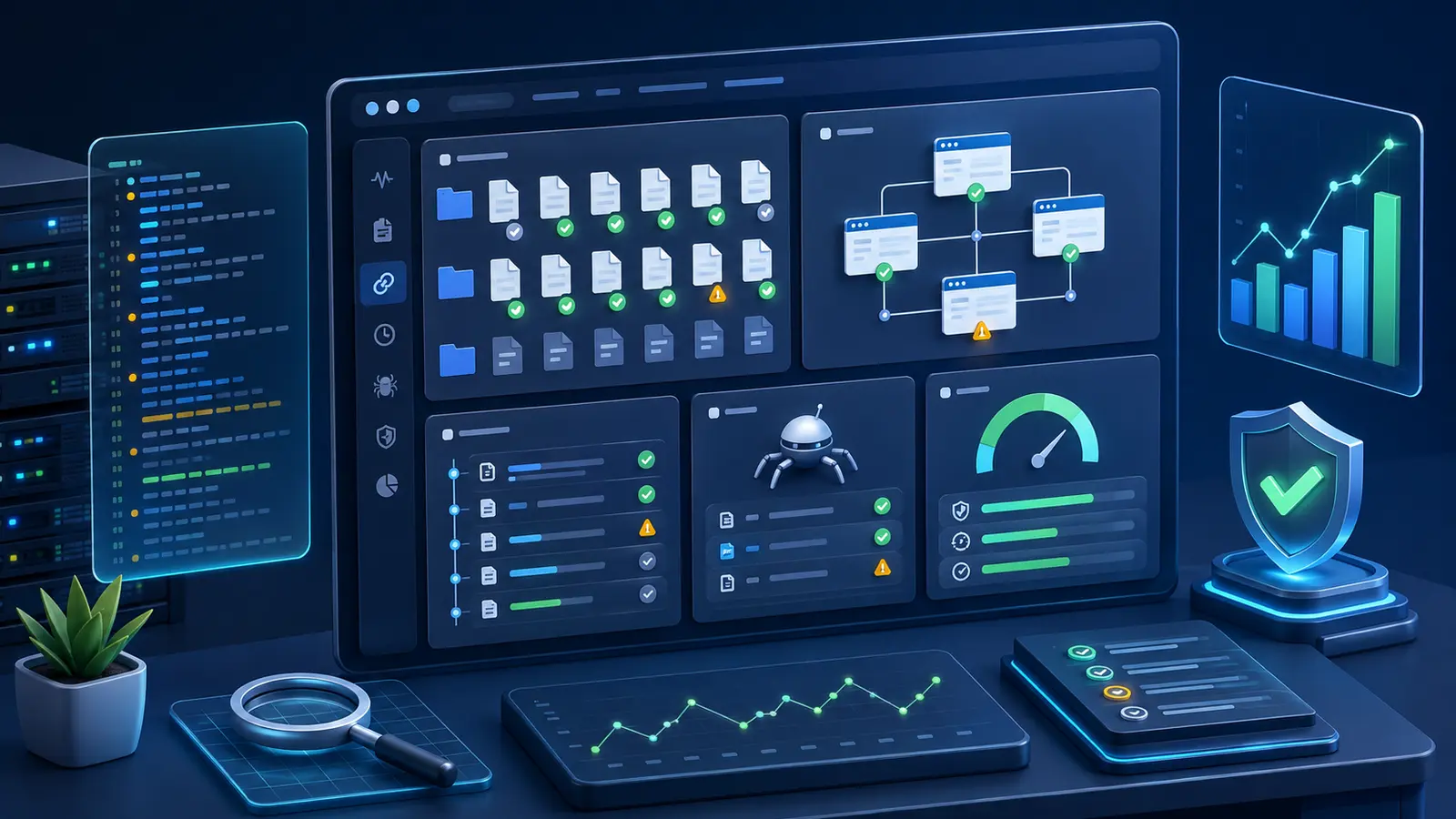
A stronger result after publication is encouraging, but ask what else changed. Was a blocked crawler allowed? Did the linked article receive new backlinks? Was the content updated? Did the platform alter its search product? A useful test changes one major variable at a time, keeps dated evidence, and compares multiple observations.
Best interpretation: “After adding llms.txt, compatible systems can access a clearer index of our selected resources, and we are monitoring whether discovery changes.” Avoid claiming, “llms.txt made us rank in AI,” unless a controlled experiment supports that conclusion.
Evidence and screenshots to include
- The live file, HTTP status, headers, and last-modified date
- Syntax and a list of every linked canonical page
- Raw HTML or Markdown showing the answer is actually present
- Crawler and CDN logs with timestamps and response codes
- Before-and-after prompts, answers, citations, and referral data
This evidence turns an opinion into a reproducible diagnostic. It also reveals broken links, stale summaries, accidental blocks, and content gaps that can be fixed even if llms.txt itself has no measurable platform effect.
Common interpretation mistake
The common mistake is presenting a proposed convention as a guaranteed ranking or citation mechanism. llms.txt is not robots.txt, an XML sitemap, structured data, or an instruction that an AI system must obey. It is a lightweight navigation document. Its value depends on whether a system reads it and whether the linked resources deserve to be used.
Prioritize fundamentals first: stable delivery, crawl permissions, indexable canonical pages, descriptive headings, verifiable facts, original experience, and useful internal linking. Then treat llms.txt as a low-risk experiment, not a replacement for technical SEO or editorial quality.
Frequently asked questions
Is llms.txt a confirmed AI ranking factor?
No major platform publicly confirms llms.txt as a direct ranking factor. The specification is a proposal for organizing LLM-friendly resources. Its presence may help compatible tools navigate content, but it does not guarantee visibility.
Does Google require llms.txt for AI Overviews or AI Mode?
No. Google’s official guidance says there are no additional technical requirements or special optimizations for appearing in its AI features beyond established Search practices.
Can llms.txt replace robots.txt or an XML sitemap?
No. These files have different purposes. robots.txt communicates crawler access preferences, an XML sitemap lists URLs for search engines, and llms.txt offers a curated Markdown guide. One does not replace the others.
What should an llms.txt file link to?
Link only to canonical, accurate, current resources that explain the organization, products, documentation, policies, or core expertise. A short curated file is more useful than a dump of every URL on the site.
How soon should AI visibility improve?
There is no universal timeline and no guaranteed improvement. Verify technical access immediately, then monitor crawler activity, citations, referrals, and conversions over a meaningful period using consistent tests.
Next step: check your website’s AI discoverability
Start with the llms.txt and machine-readable website guide, then use the llms.txt validation checklist to test access, syntax, linked-page quality, and change history. Visible Pilot helps you separate a useful experiment from the technical and content issues that actually block discovery.