

Free vs paid AI visibility checker is not simply a choice between spending nothing and buying a bigger dashboard. A free checker is usually best for a fast first look: it can expose obvious access problems, sample a limited set of prompts, or show whether a brand appears in a small test. A paid tool is built for repeated measurement, broader coverage, history, workflows, and evidence that a team can use over time.
The right option depends on the decision you need to make. If you are checking one website once, a focused free scan may be enough. If an agency must compare clients, track many prompts, investigate changes, or prove progress, a paid system can save substantial manual work. This guide shows how to compare both without assuming that a price tag guarantees accuracy.
Short answer:
Use a free AI visibility checker to establish a quick baseline or diagnose an obvious issue. Choose a paid checker when you need repeatable monitoring, raw evidence, historical comparisons, exports, team access, and support. Before paying, run the same site and prompt set through both options and compare findings—not just scores.
Free vs paid AI visibility checker: the meaningful difference
A free checker is normally a sampling tool. It may test a homepage, review crawler controls, query a small prompt set, or return a simplified visibility score. That limited scope can be useful because it reduces friction: a website owner can enter a URL, see a result, and decide whether deeper investigation is justified.
A paid AI visibility checker is normally a measurement system. It should preserve prompt groups, dates, platforms, locations, cited URLs, competitor results, and change history. The value is not “more data” by itself. The value is being able to repeat the same method, explain why a result changed, and give another person enough evidence to reproduce the conclusion.
Definitions and boundaries
A free AI visibility checker should disclose what it tested, show useful evidence, distinguish pass, warning, failure, and inconclusive results, and state sample limits. A paid checker should add saved projects, scheduled runs, history, broader coverage, raw outputs, citations, exports, alerts, permissions, and support. Neither option can guarantee that an external AI system will mention or cite a website; every result is evidence collected under defined conditions.
Free vs paid AI visibility checker comparison
Use official platform guidance to validate what a checker claims. OpenAI’s publisher guidance explains how public sites can appear in ChatGPT search and how crawler controls affect discoverability, while Google Search Essentials makes clear that meeting technical requirements does not guarantee crawling, indexing, or serving. A responsible checker reports observed evidence and limitations rather than promising inclusion.
| Decision area | Free checker | Paid checker |
|---|---|---|
| Best use | Quick diagnosis or first baseline | Ongoing measurement and team workflow |
| Coverage | Limited URLs, prompts, platforms, or runs | Broader configurable projects and prompt sets |
| History | Often absent or short-lived | Scheduled trends and change records |
| Evidence | Summary findings and selected examples | Raw outputs, citations, logs, filters, and exports |
| Collaboration | Usually designed for one user | Seats, permissions, notes, reports, and alerts |
| Cost | No subscription; more manual work | Subscription or usage fees; less repetitive work |
| Main risk | Overgeneralizing from a small sample | Trusting polished scores without checking the method |
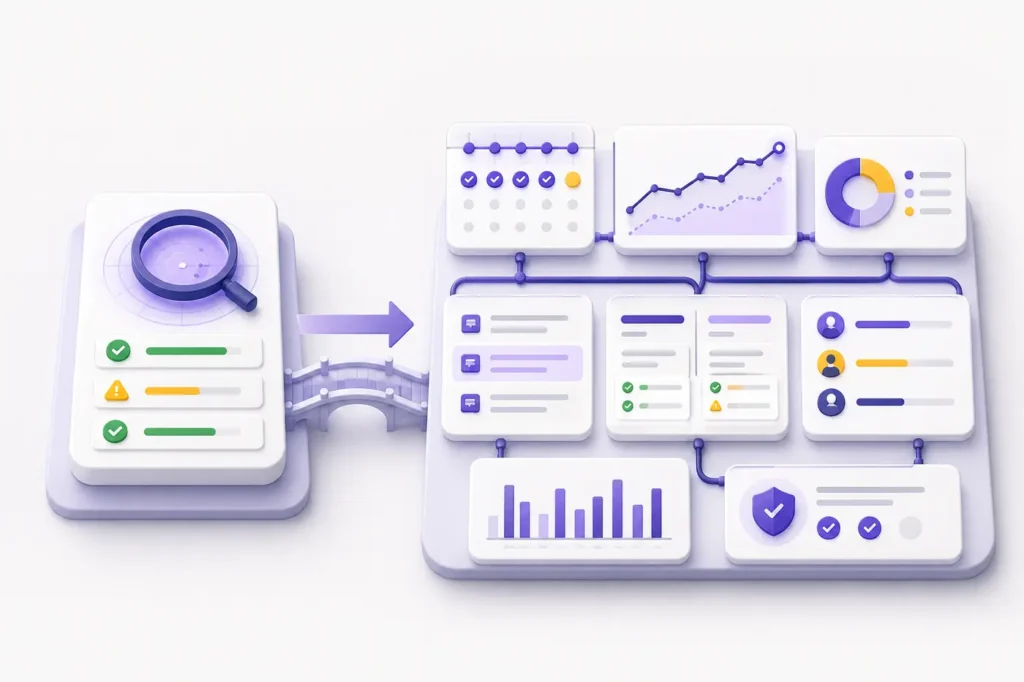
Discovery and access implications
Both free and paid tools should begin below the dashboard layer. A website may be invisible because robots.txt blocks a relevant crawler, a firewall returns 403 responses, rate limits trigger 429 responses, canonical or noindex rules conflict, or important content appears only after client-side rendering. A visibility score cannot diagnose these failures unless the tool tests the delivered page and shows the response evidence.
Do not confuse access with citation readiness. A 200 response means the server delivered something; it does not prove that the useful copy was present, understood, retrieved, trusted, or cited. Use a staged model—access, processing, retrieval, mention, and citation—and investigate the first failed stage. The practical steps in how to test HTML visible to AI crawlers can help confirm what automated clients actually receive.
Measurement, evidence quality, and repeatability
Accuracy is the decisive issue in a free vs paid AI visibility checker comparison. Generated answers can change with prompt wording, model updates, retrieval freshness, geography, account state, and randomness. A tool that runs a prompt once may capture a real answer, but it has not shown whether that answer is typical.
A credible method freezes a prompt panel and records the environment. It separates branded prompts from non-branded discovery questions, groups prompts by intent, and keeps the denominator visible. Mention rate and citation rate should also remain separate: a brand can appear without a clickable source, while a page may be cited without receiving prominent narrative treatment.
The most useful paid features are therefore methodological, not decorative. Look for repeated runs, prompt versioning, raw outputs, cited-page records, filters, change annotations, and exports. If the provider cannot explain how a score is calculated, the score is hard to audit. The same standard applies to a free tool; limited scope is acceptable, hidden scope is not.

Best choice by scenario
| Scenario | Recommended starting point | Reason |
|---|---|---|
| New website | Free checker | Find obvious access and content gaps before paying for monitoring. |
| Stable small business | Free, then upgrade if needed | Pay when manual checks become inconsistent or history matters. |
| Agency with many clients | Paid checker | Saved projects, repeatable reports, exports, and permissions reduce labor. |
| Active experiment | Paid or rigorous manual system | Stable prompts, history, and annotations are essential for comparison. |
A combined workflow that uses both well
- Define the decision. Choose the market, audience, pages, competitors, and customer questions that matter.
- Run the free baseline. Capture obvious technical failures and a small representative prompt sample.
- Inspect raw evidence. Confirm what was fetched, which answers mentioned the brand, and which URLs were cited.
- Trial the paid checker. Reuse the same URLs and prompt wording so the outputs are comparable.
- Compare findings before scores. Look for agreement, omissions, false positives, and unexplained differences.
- Estimate workflow value. Price the time saved by scheduled runs, history, exports, reporting, and collaboration.
- Retest after changes. Keep inputs stable, document the intervention, and preserve positive, negative, and null results.
Test an AI visibility checker yourself
Before subscribing, benchmark both options with 20 to 30 fixed prompts covering discovery, comparisons, and purchase intent. Repeat the panel and save the raw answers where terms permit.
- Exact prompt wording, intent, AI product, test date, and location
- Brand mentioned or absent, including context
- Domain cited or absent, including the exact linked URL
- Competitors measured under the same prompt
- Differences across repeated runs and the tool’s explanation
Then compare total cost: fees, usage limits, setup, manual review, reporting time, and false-positive risk. A paid checker earns its place when its evidence is trustworthy and its workflow savings exceed its cost.
Common interpretation mistake:
Do not choose by dashboard polish or a single proprietary score. Tools may use different prompts, engines, countries, schedules, matching rules, and weights. Compare reproducible evidence before comparing headline numbers.
Frequently asked questions
Are free AI visibility checkers accurate?
They can report the tests they actually run accurately, but the sample may be narrow. Check whether the tool discloses prompts, platforms, timing, and raw evidence. Treat a small sample as a diagnostic snapshot, not complete market coverage.
When is a paid AI visibility checker worth it?
It is worthwhile when recurring measurement, multiple sites or prompts, historical comparisons, exports, alerts, and collaboration save more time or reduce more risk than the subscription costs.
Can different tools show different scores?
Yes. Prompt sets, weighting, geography, model access, matching rules, and run frequency can all differ. Compare underlying mentions, citations, and URLs before treating either score as authoritative.
Choose evidence, not the biggest score
The practical answer to free vs paid AI visibility checker is to match the tool to the decision. Use free testing for fast orientation. Pay when repeatability, coverage, history, evidence, and workflow savings matter. In both cases, insist on transparent inputs and outputs. An explainable smaller result is more useful than a precise-looking number that nobody can reproduce.
Ready for a more reliable baseline?
Visible Pilot is building a clearer way to identify crawler access, technical delivery, content clarity, and AI-search visibility issues without hiding the evidence behind one opaque score.
Join the Visible Pilot early-access list and be first to test your website.