
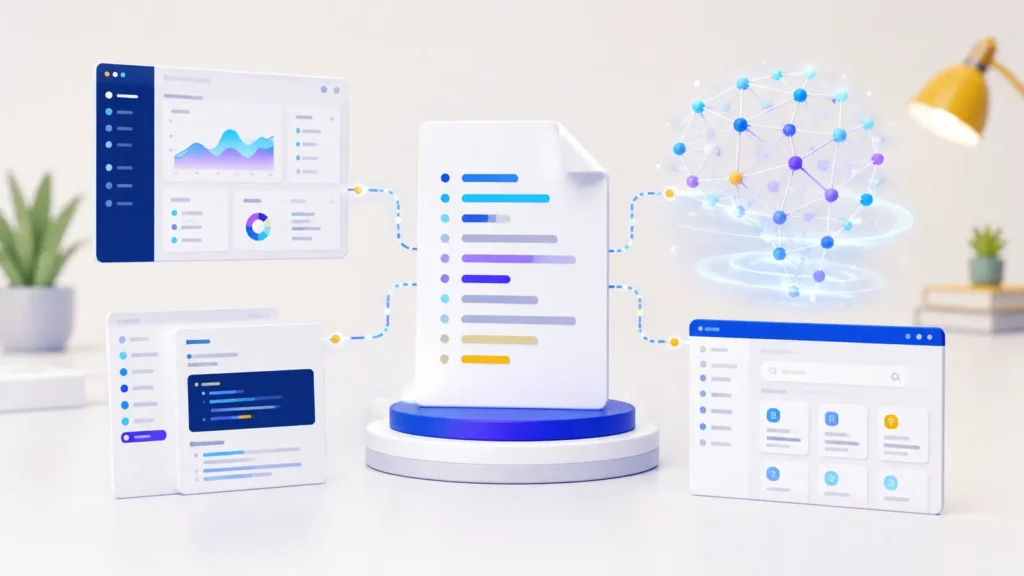
Llms.txt examples for SaaS websites are most useful when they act as a curated map—not a second sitemap and not a promise of higher AI rankings. A good file introduces the SaaS product clearly, groups the pages an agent may need, and links to accurate product, documentation, security, integration, pricing, and support resources. This guide gives you three practical templates and a repeatable way to test them.
Quick answer: Publish a concise Markdown file at /llms.txt, include one H1, a short blockquote description, and grouped link lists with useful descriptions. Keep the selection focused. Then verify the file returns HTTP 200, every linked page is public and useful, and any observed outcome is measured before and after publication.
What llms.txt examples for SaaS websites mean in practice
The llms.txt proposal describes a human- and machine-readable Markdown file, normally available from the root of a site. Its only required element is an H1 containing the site or project name. The proposed format can also contain a short blockquote summary, explanatory notes, and H2 sections with lists of links.
For a SaaS company, the file should help a reader answer basic questions quickly: What does the product do? Who is it for? Where are the authoritative feature and pricing pages? Where can a developer find API documentation? What pages explain security, privacy, integrations, and support?
This is different from robots.txt, which communicates crawl permissions, and from sitemap.xml, which generally lists a much broader set of indexable URLs. Llms.txt is a proposed convention for providing selected context. It does not override authentication, noindex directives, crawler blocks, firewall rules, or weak content.
Step 1: establish a clean baseline
Before publishing anything, choose representative questions that a prospect, customer, or agent might ask. Include a product-definition question, a use-case question, a pricing question, a security question, and—if relevant—an API implementation question.
Record the current answers, cited URLs, date, test environment, and whether the correct page was found. Also save a simple technical baseline for the URLs you expect to include: HTTP status, canonical URL, robots directives, returned page title, and whether the main answer appears in accessible HTML.
Do not change several systems at once. If you rewrite navigation, alter crawler rules, migrate the CDN, and publish llms.txt on the same day, you will not know which change affected the result.
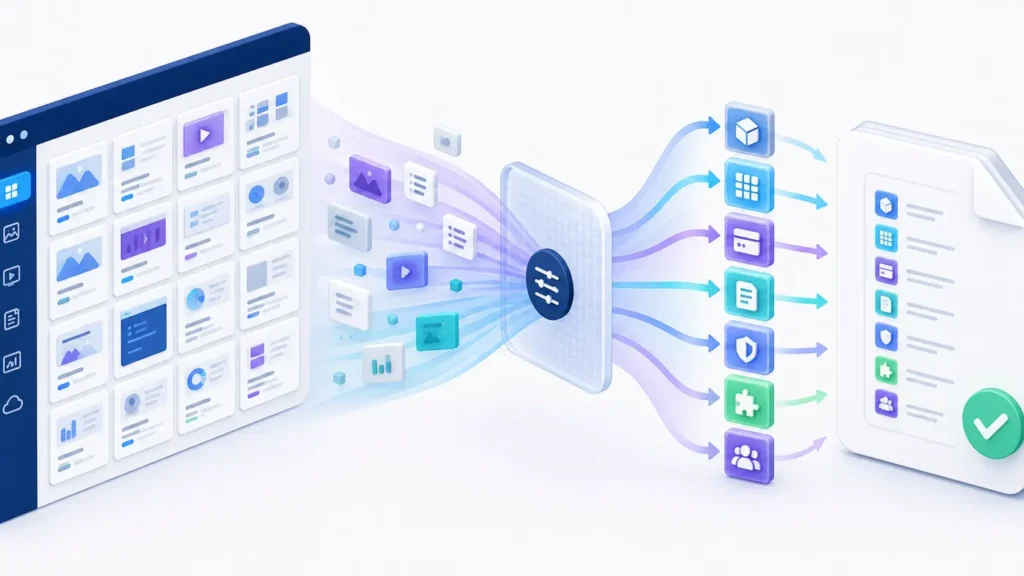
Three llms.txt examples for SaaS websites
Use these templates as starting points. Replace every placeholder with a real canonical URL and an accurate one-line description.
Example 1: early-stage B2B SaaS
# ExampleFlow

> ExampleFlow helps small operations teams manage requests, approvals, and recurring work in one workspace.

Important notes:
- The product is intended for business teams, not personal task management.
- Pricing is per workspace and current terms are listed on the pricing page.

## Product

- [Product overview](https://example.com/product): Core workflow, approval, and reporting capabilities.
- [Use cases](https://example.com/use-cases): Common workflows for operations, finance, and client-service teams.
- [Pricing](https://example.com/pricing): Plans, limits, billing terms, and trial information.

## Trust and support

- [Security](https://example.com/security): Security practices, hosting, access controls, and compliance status.
- [Help centre](https://example.com/help): Setup and troubleshooting documentation.
This version stays small because an early-stage SaaS business may only have a few authoritative pages. Do not fill it with thin campaign pages simply to make the file look comprehensive.
Example 2: developer or API SaaS
# ExampleAPI

> ExampleAPI provides a hosted document-processing API for software teams.

## Start here

- [API overview](https://example.com/docs): Supported workflows and documentation index.
- [Quickstart](https://example.com/docs/quickstart): First authenticated request and response.
- [Authentication](https://example.com/docs/authentication): API keys, token handling, and security requirements.

## Reference

- [API reference](https://example.com/docs/api): Endpoints, parameters, responses, and errors.
- [SDKs](https://example.com/docs/sdks): Maintained client libraries and installation guidance.
- [Changelog](https://example.com/changelog): Dated product and API changes.

## Optional

- [Engineering blog](https://example.com/blog): Design notes and implementation articles.
The special Optional heading in the proposal identifies lower-priority resources that may be skipped when shorter context is needed. For developer SaaS, versioned documentation, error references, and changelogs are often more valuable than broad marketing content.
Example 3: multi-product SaaS platform
# ExampleCloud

> ExampleCloud provides analytics, automation, and customer-data products for mid-market teams.

## Platform

- [Platform overview](https://example.com/platform): Shared capabilities, administration, and product relationships.
- [Analytics](https://example.com/products/analytics): Reporting, dashboards, and data requirements.
- [Automation](https://example.com/products/automation): Triggers, actions, limits, and workflow examples.
- [Customer data](https://example.com/products/data): Profiles, sources, identity rules, and destinations.

## Evaluation

- [Pricing](https://example.com/pricing): Plan structure and product-specific limits.
- [Integrations](https://example.com/integrations): Supported connectors and configuration guides.
- [Customer stories](https://example.com/customers): Documented outcomes and implementation context.

## Governance

- [Security](https://example.com/security): Controls, certifications, and security contacts.
- [Privacy](https://example.com/privacy): Data processing and privacy terms.
For a platform, start with a page that explains how the products relate. A flat list of dozens of feature URLs makes interpretation harder and increases maintenance work.
Step 2: validate, publish, and observe
Check that the file follows the proposed order: H1, optional summary, optional explanatory content, and H2 link sections. Serve it as readable plain text or Markdown at https://yourdomain.com/llms.txt. The URL should return a stable 200 response without login, cookie dependency, redirect loop, or security challenge.
Open every link. Remove redirects where practical, correct broken URLs, and ensure each destination contains the information described beside it. A technically valid file that points to outdated, duplicated, or vague pages is not useful.
Evidence rule: A successful HTTP check proves accessibility. It does not prove an AI system uses the file, improves a ranking, or selects your site as a citation.
Step 3: separate access, rendering, and content failures
When a test fails, identify the layer. An access failure means the file or a linked page cannot be fetched reliably. A rendering failure means the response succeeds but the important information is missing from the delivered document. A content failure means the page is readable but does not answer the expected question clearly.
Llms.txt cannot repair these underlying problems. Fix accidental blocks, unstable responses, incorrect canonicalization, missing server-rendered content, or poor page quality at the source.
Step 4: make the smallest safe fix
If the file is too long, remove low-value URLs or move secondary resources under Optional. If descriptions are vague, rewrite them to state what the reader will find. If important product facts conflict across marketing pages and documentation, correct the source pages before changing the file.
Avoid automatically publishing every CMS URL. Exclude tag archives, search pages, legal duplicates, expired campaigns, thin localization variants, and private or customer-only resources. Never expose confidential documentation just to make a site appear more machine-readable.
Step 5: retest with the same inputs
Repeat the original question set without changing its wording. Compare results over a defined observation window and keep crawler or server logs when available. Record successes and null results. Your technical pass condition should be specific: the file returns 200, its syntax is readable, its links resolve, and the linked pages contain the promised information.
Treat discovery, mentions, links, and citations as separate observed outcomes. A single favorable answer is not proof of a durable change because AI results can vary by platform, mode, freshness, location, and prompt wording.
Worked example
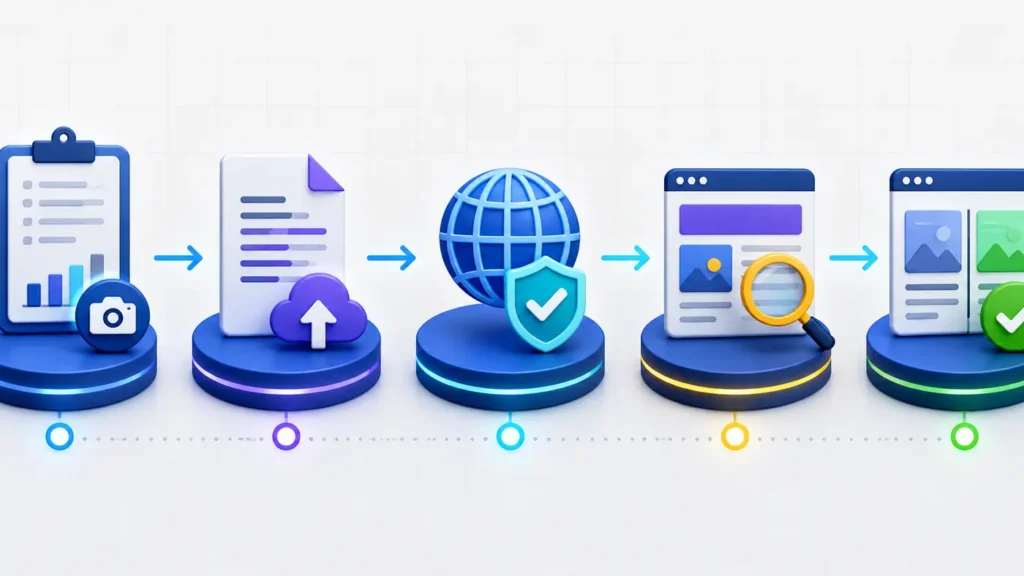
Imagine a SaaS company whose pricing answer repeatedly cites an old launch article. Its baseline shows that the canonical pricing page is public and current, while the launch article remains prominent in navigation. The team publishes a focused llms.txt file linking the pricing page with a clear description, updates internal links to the canonical pricing URL, and removes outdated claims from the article.
On retest, the file and pages pass all technical checks. If the correct pricing page later appears, the team can report the observed change—but cannot assign causation to llms.txt alone because internal linking and source content also changed. A stronger future experiment would change one variable at a time.
Common interpretation mistake
The biggest mistake is presenting llms.txt as a guaranteed AI-search ranking control. The original specification calls it a proposal and does not prescribe how an application must process it. Use it as a low-risk, curated context file and testing surface. Continue investing in public access, useful pages, clear entities, accurate claims, original evidence, internal links, and conventional technical SEO.
Frequently asked questions
How many URLs should a SaaS llms.txt file contain?
There is no universal number in the proposal. Include the smallest set that clearly explains the product and supports important evaluation, implementation, trust, and support questions.
Should llms.txt replace sitemap.xml or robots.txt?
No. They serve different purposes. Keep a correct sitemap for discoverable pages and use robots.txt for crawl controls. Llms.txt can coexist as a curated context file.
Should every SaaS page have a Markdown version?
The proposal encourages clean Markdown versions of useful pages, but implementation depends on your stack and audience. Prioritize accurate, accessible source content before generating additional formats.
Can llms.txt guarantee citations in ChatGPT or other AI systems?
No. Accessibility and useful structure can be tested; citation remains platform-dependent and cannot be guaranteed.
Next step
Use the llms.txt validation checklist to confirm syntax, accessibility, linked-page quality, and evidence. Then review common llms.txt mistakes before publishing or automating updates.