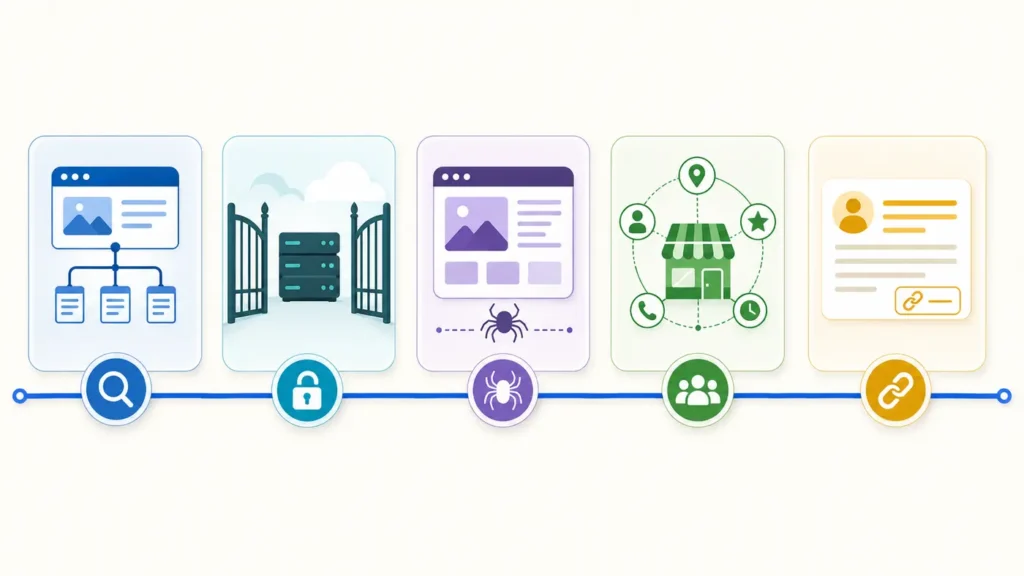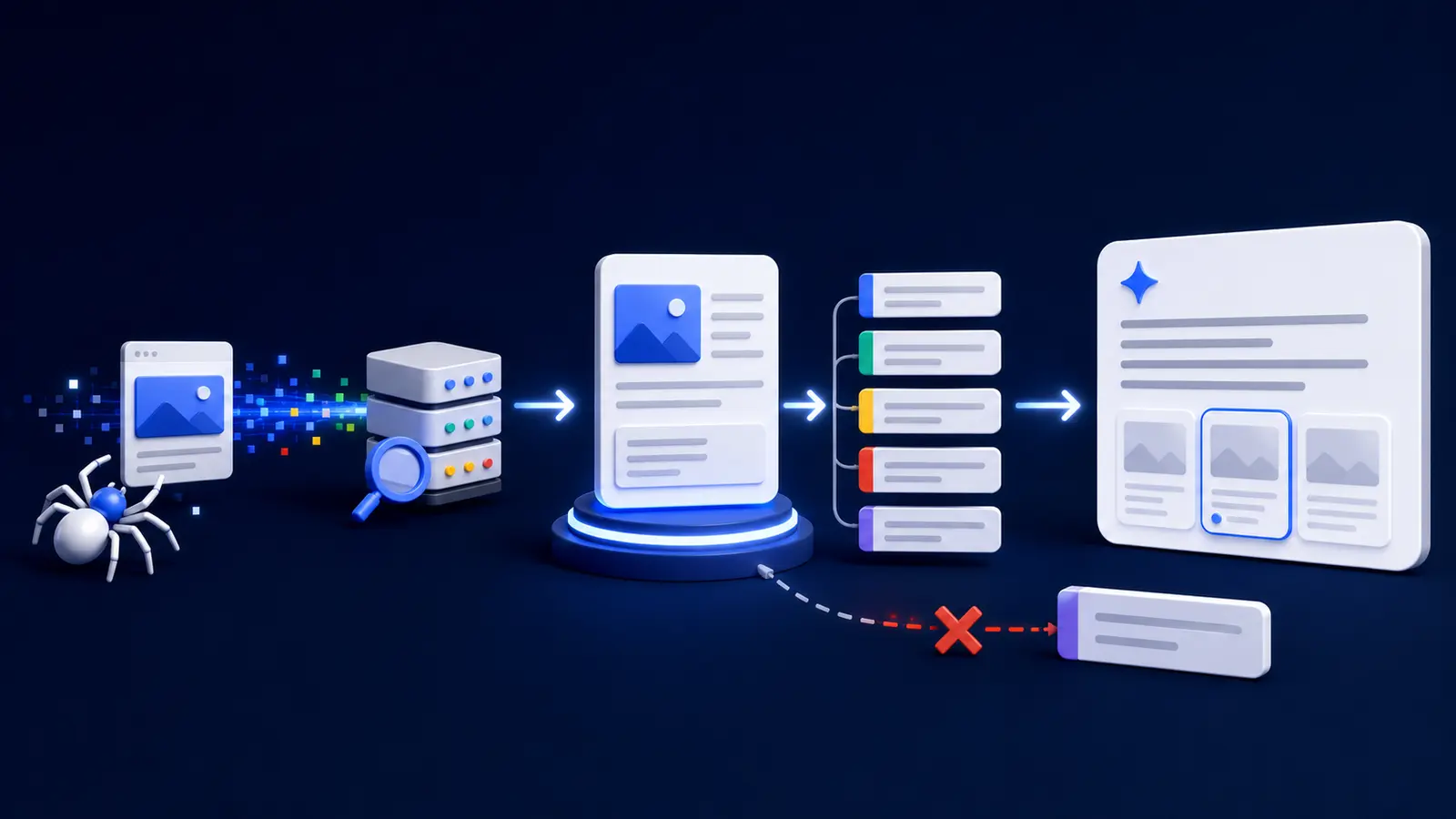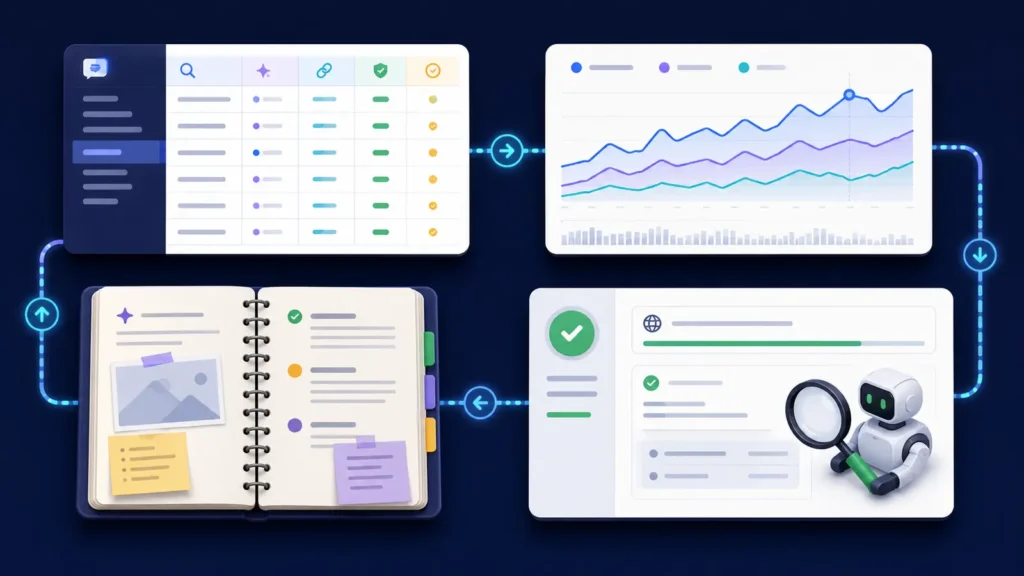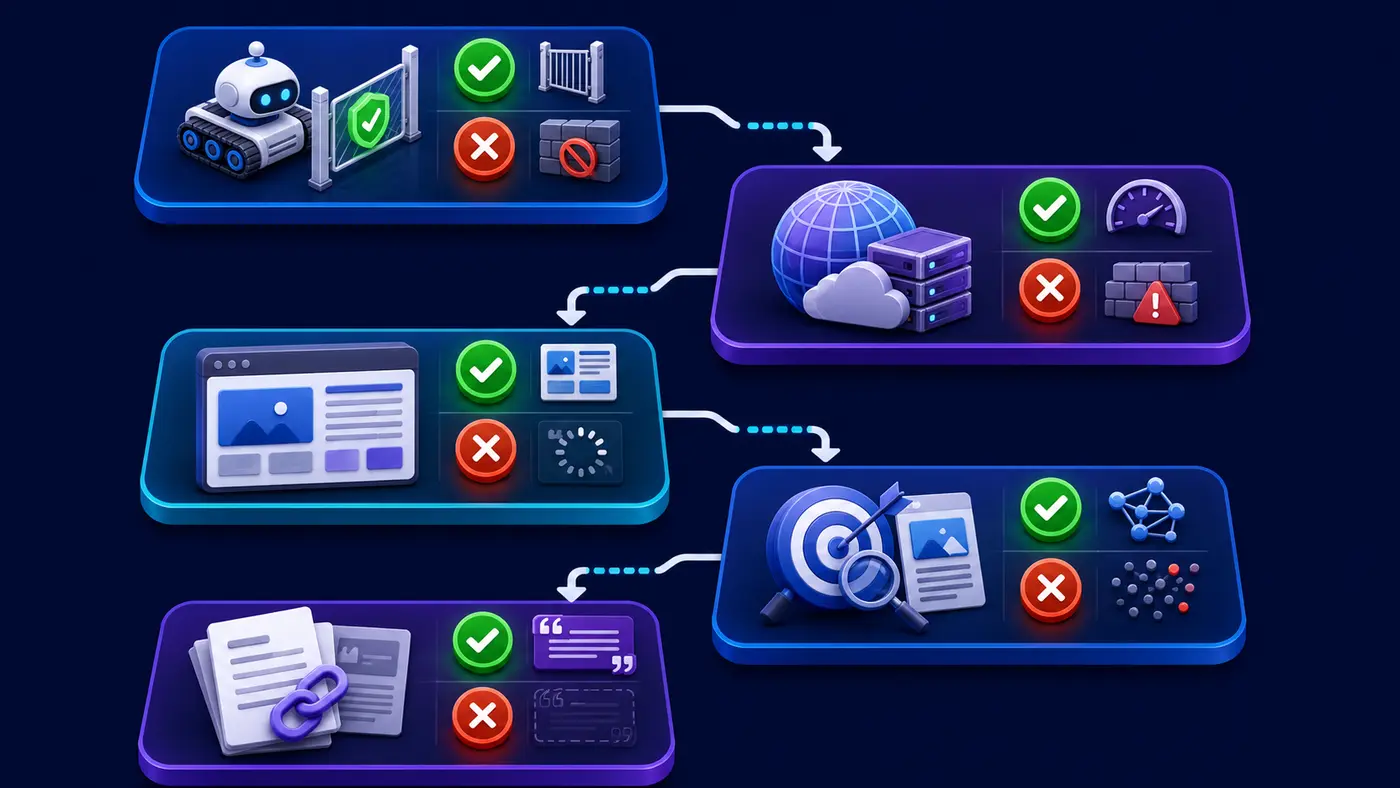
A credible from zero AI citations to first citation case study needs more than a celebratory screenshot. It must show what was tested, which page was cited, what changed, how often the result repeated, and what remains uncertain. This guide presents the evidence standard Visible Pilot will use for future client studies. Because no verified client dataset was supplied for this article, the numerical example below is explicitly illustrative—not a claimed customer result.
Transparency note: This is a case-study methodology with a labelled example dataset. It does not claim that Visible Pilot has already moved an unnamed client from zero citations to a first citation. Publishing invented results would undermine the very evidence standard this page recommends.
What “zero citations” should mean
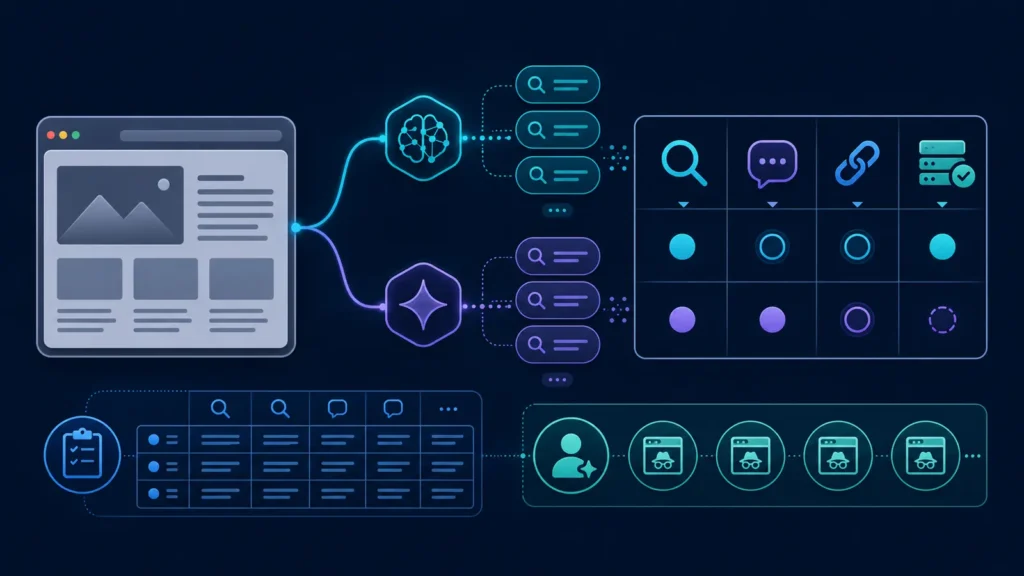
“Zero” must refer to a defined test, not a universal condition. An AI answer can vary by platform, model, location, account state, date, wording, and whether web search is used. A site that is absent from ten tracked prompts today may still appear for another prompt tomorrow. Therefore, the baseline should be written as a bounded observation: zero cited appearances across a fixed prompt set, platform set, and measurement window.
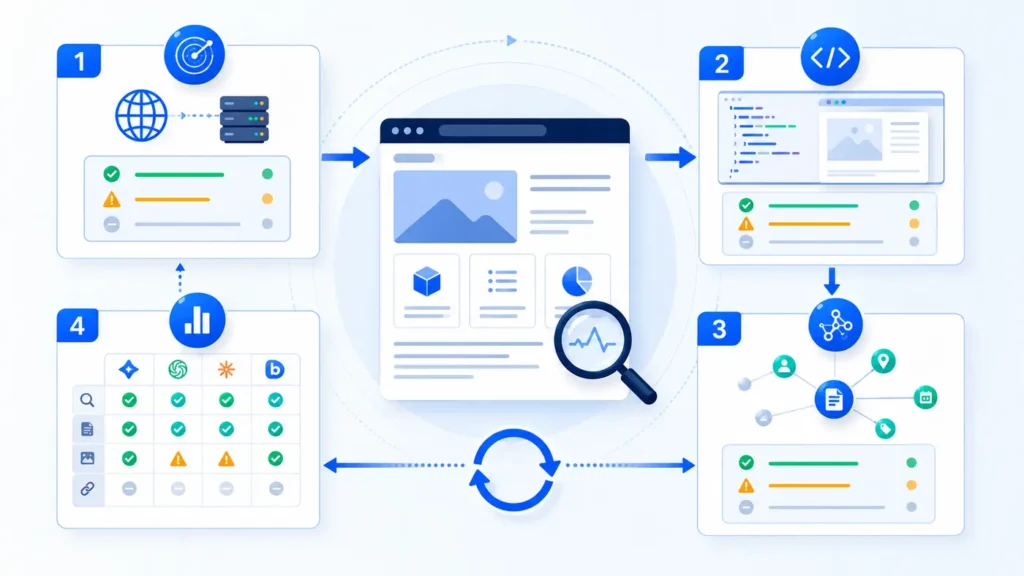
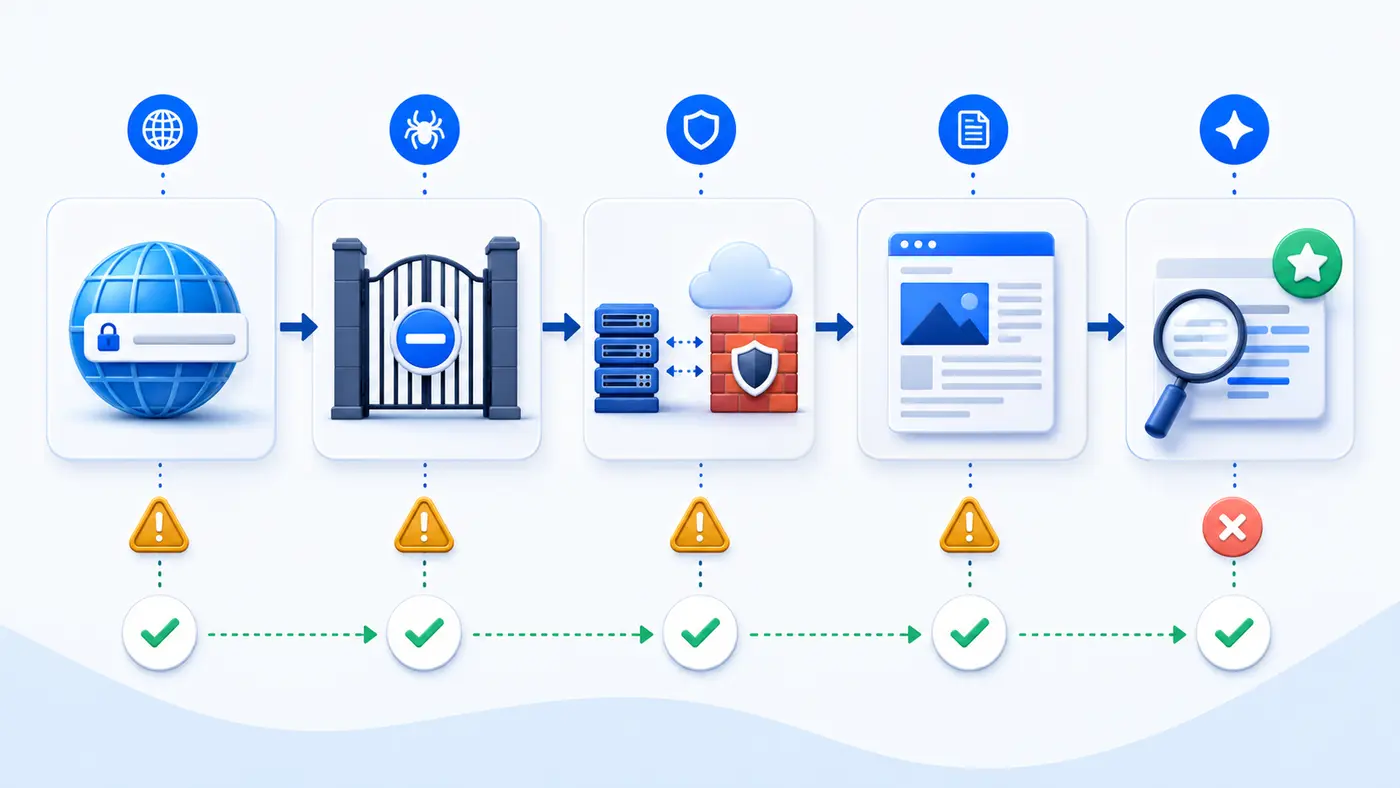
Record four outcomes separately: successful page retrieval, discovery in an answer, an unlinked brand mention, and a linked citation. Combining them into one visibility score hides where the failure occurs. A crawler may retrieve a page that is never selected as a source; an answer may mention a brand without citing its website.
Baseline evidence to capture
- Study dates, platforms, model or product surface, location, and account conditions.
- The exact prompt list, including spelling, punctuation, and whether follow-up questions were used.
- Full answer screenshots or exports, the cited URLs, timestamps, and source ordering.
- Representative page status codes, robots directives, canonical tags, index signals, and rendered content.
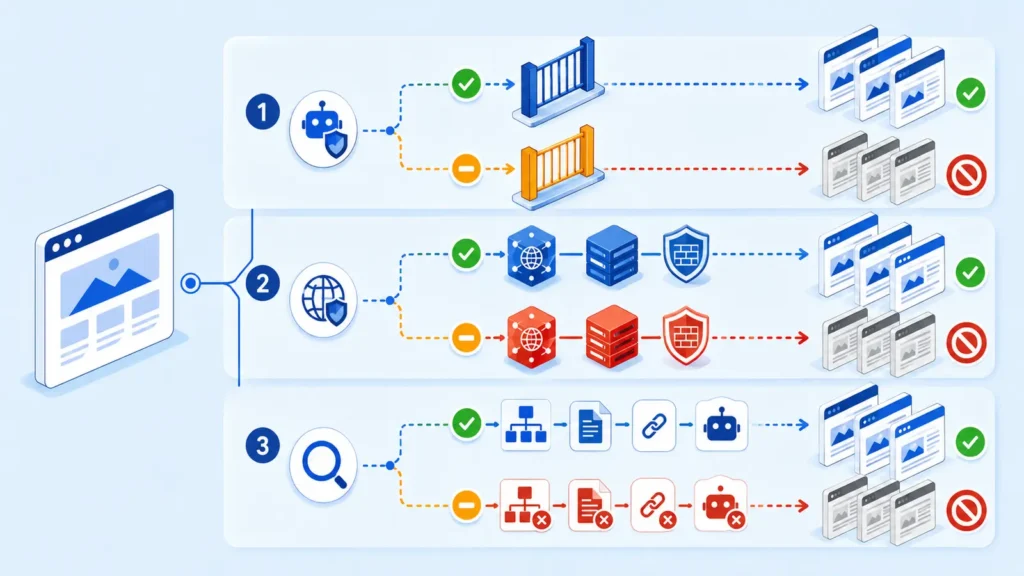
- Server, CDN, or WAF evidence showing whether relevant crawlers could reach the tested URLs.
- Brand and entity facts available on the site, including organization, author, service, and contact information.
The baseline should cover informational, problem-aware, comparison, and brand-plus-category queries. Brand-only prompts are useful controls, but they are too easy to treat as proof of broader discovery.
Diagnosis: find the broken stage
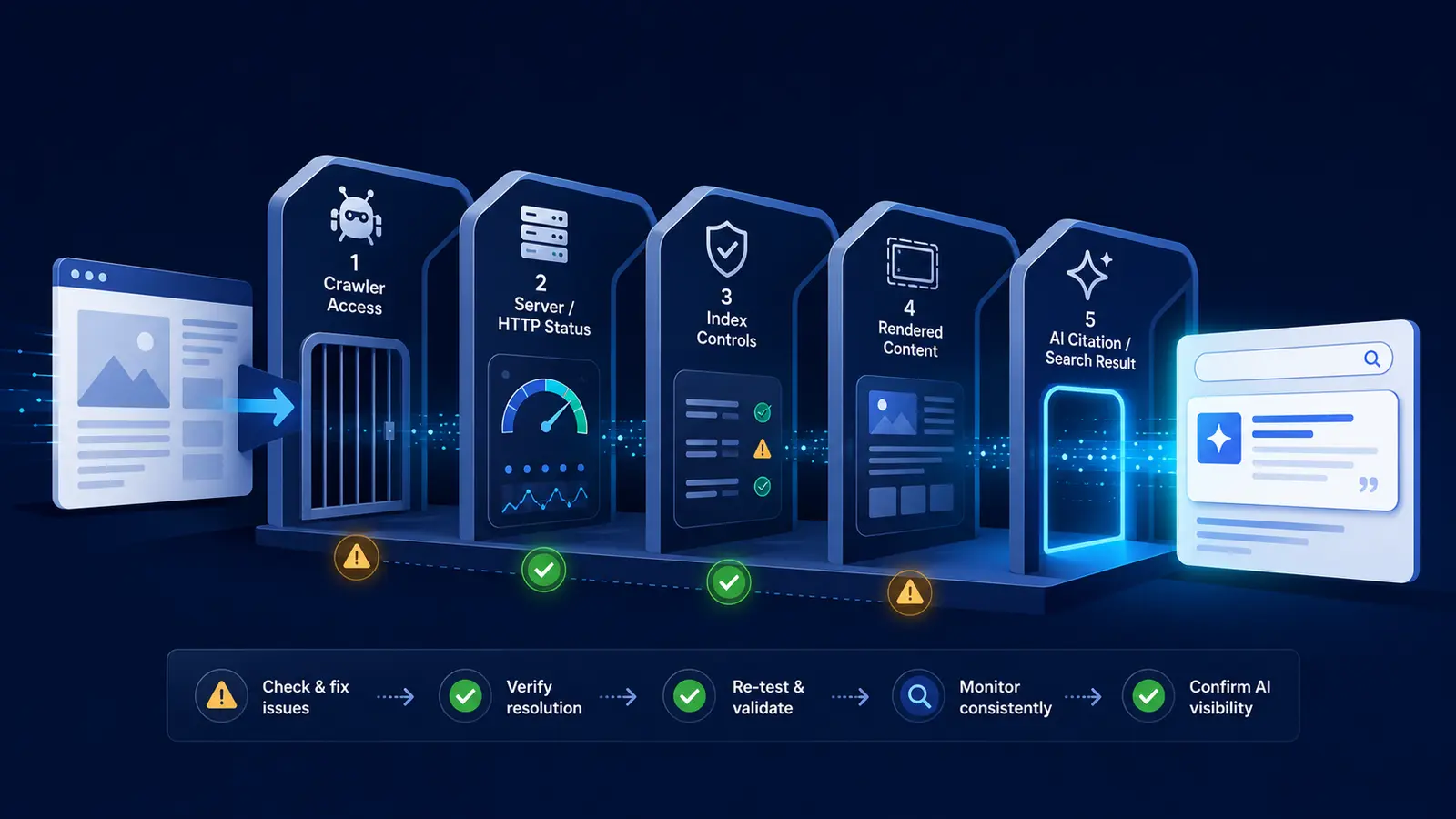
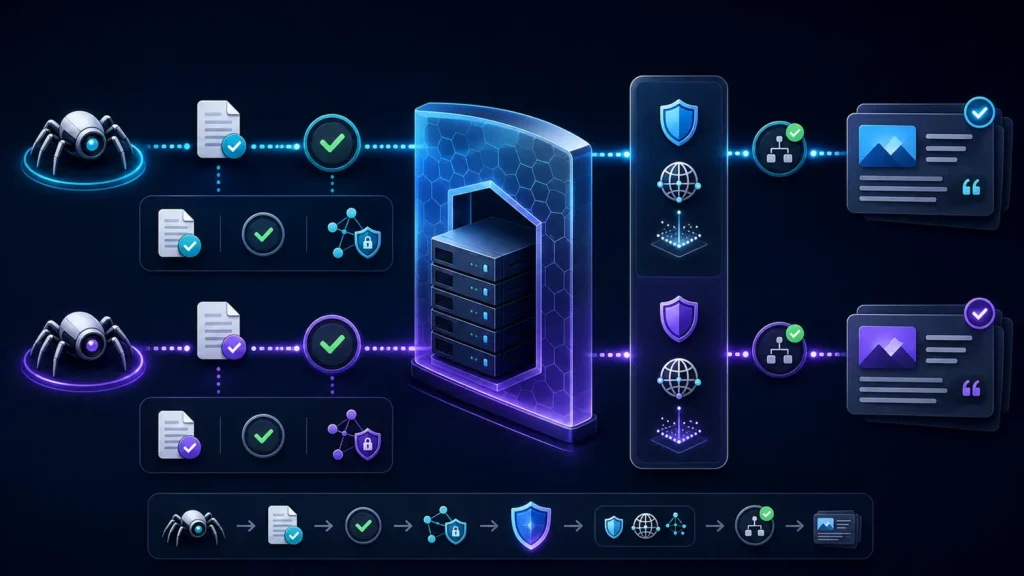
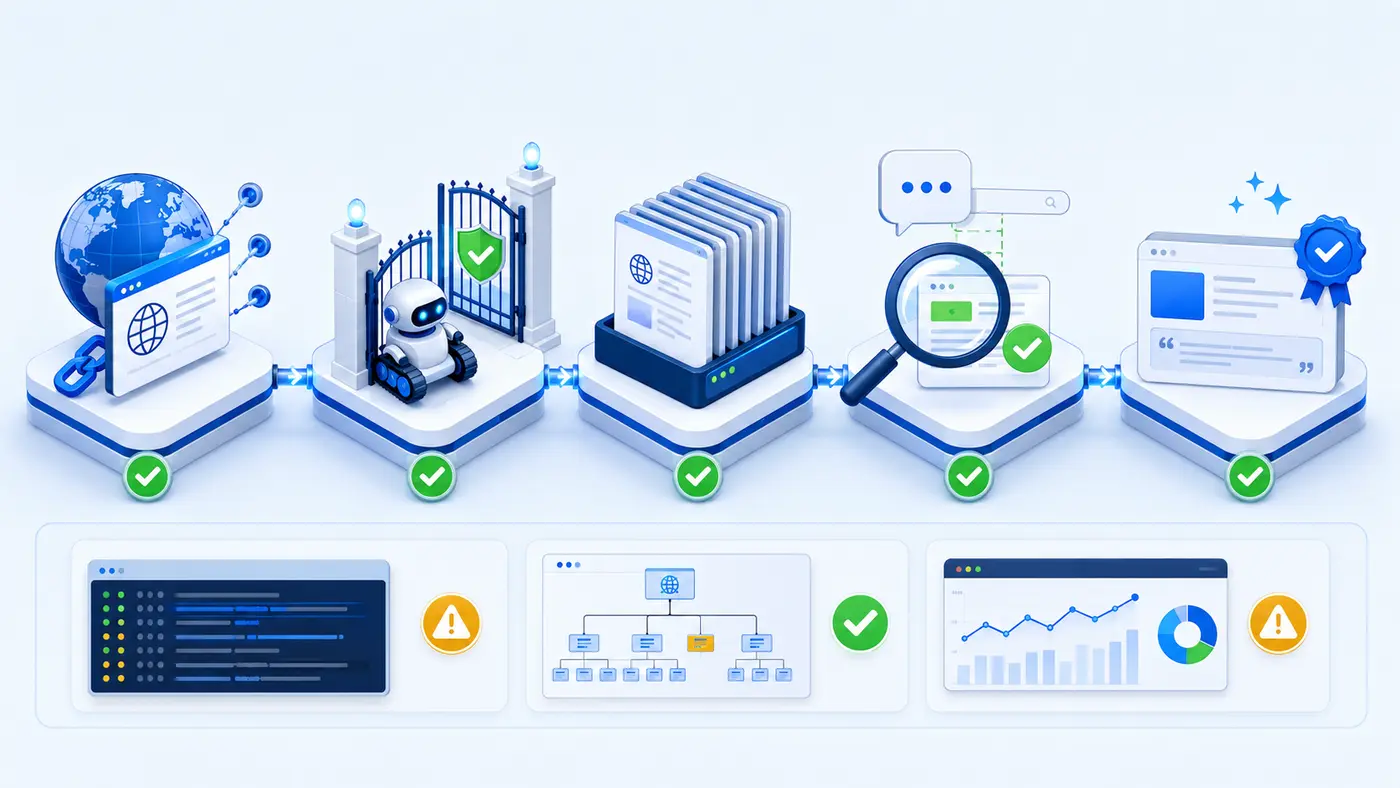
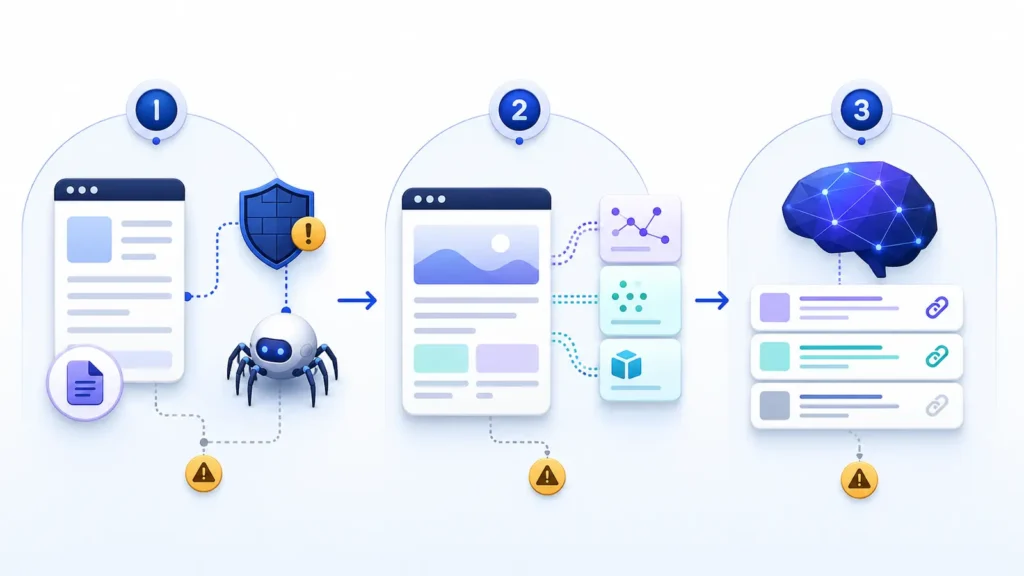
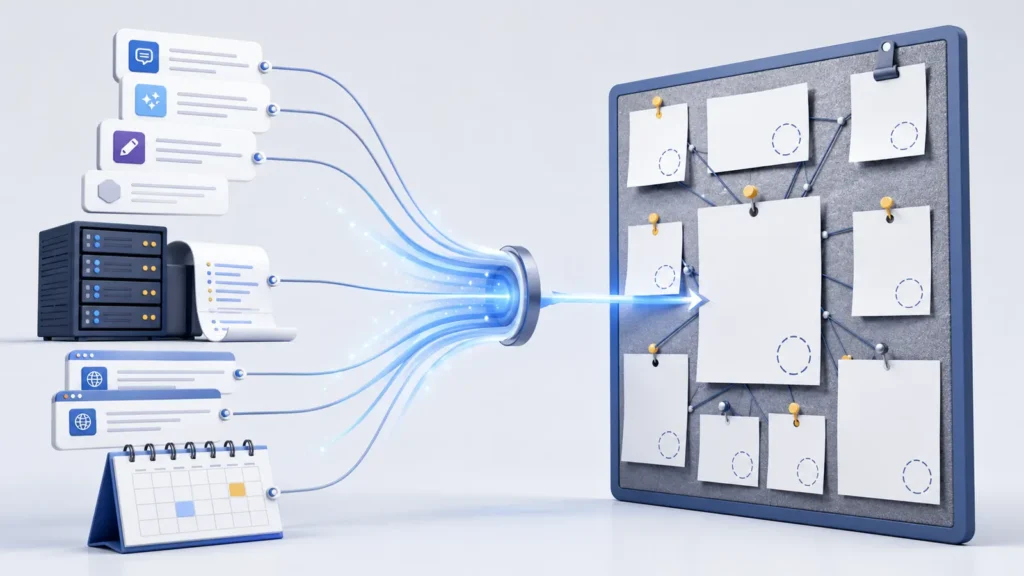
The initial hypothesis is often “AI does not understand our content.” That may be true, but it is incomplete until access and indexability are tested. Diagnose the pipeline in order: retrieval, parsing, discovery, relevance, evidence quality, and citation selection. A failure early in the pipeline makes downstream content polishing irrelevant.
| Stage | Question | Useful evidence |
|---|---|---|
| Access | Can the intended crawler retrieve the page? | HTTP response, robots rules, edge and origin logs |
| Discovery | Can the platform find the URL or entity? | Indexed URL checks, fixed prompts, cited-source exports |
| Relevance | Does the page directly answer the tracked query? | Query-to-section mapping and competitor source comparison |
| Evidence | Does the page provide verifiable, attributable value? | Original data, named methodology, dates, authors and sources |
| Citation | Is the site linked in the answer? | Dated answer capture and exact destination URL |
Important: A user-agent-only request is a behaviour test, not proof that genuine crawler traffic reached the site. Authenticate real bot activity using trusted server or edge logs and the operator’s current published IP information where available.
Intervention plan: prioritize changes, not activity
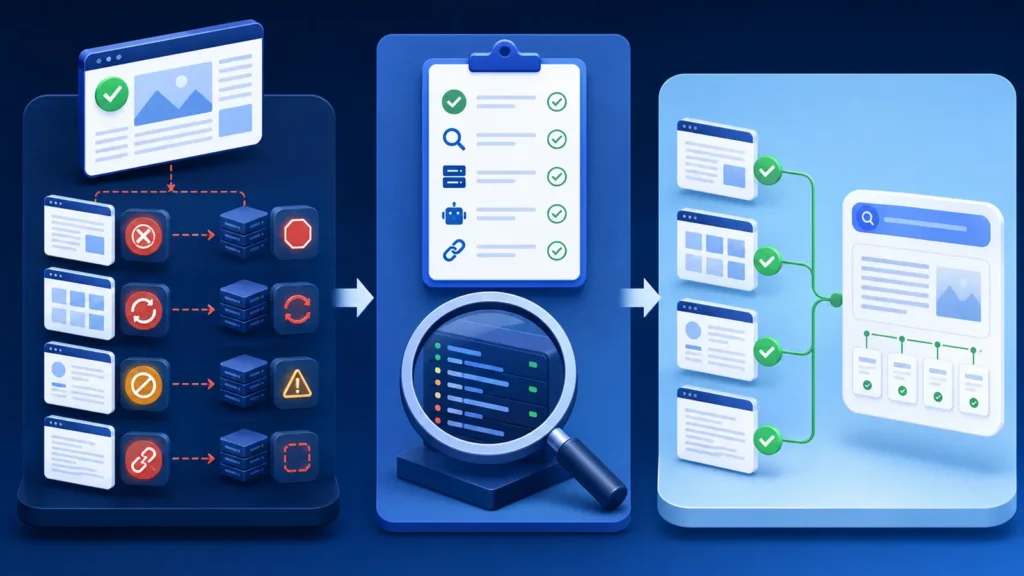
A defensible intervention plan fixes the highest-impact verified constraint first. If a security rule returns 403 to a legitimate crawler, resolve that narrow access problem before rewriting dozens of pages. If access is healthy but the page gives generic advice, strengthen the page with a direct answer, original evidence, clear definitions, and sources. Changes should be recorded individually so the team can connect outcomes to a plausible mechanism.
- Repair confirmed HTTP, redirect, robots, canonical, or rendering failures.
- Align one representative page with one tightly defined prompt group.
- Add original evidence: a test, benchmark, worked example, screenshot, or downloadable method.
- Clarify organization, author, date, and subject entities in visible page content.
- Improve internal links from the relevant pillar and supporting diagnostic pages.
- Avoid unrelated redesigns, mass schema changes, and simultaneous site-wide rewrites during the test.
Implementation timeline
| Week | Action | Reason |
|---|---|---|
| 0 | Freeze prompt set and capture baseline | Creates a comparison point before changes |
| 1 | Fix verified access or delivery failures | Removes hard retrieval barriers |
| 2 | Improve one target page and supporting internal links | Limits variables and strengthens relevance |
| 3–4 | Allow discovery time; continue scheduled tests | Prevents constant edits from contaminating the window |
| 5 | Compare results and inspect cited destination URLs | Separates a real citation from a brand mention |
| 6 | Retest variants and document limitations | Checks whether the observation repeats |
Measurement method for a first AI citation
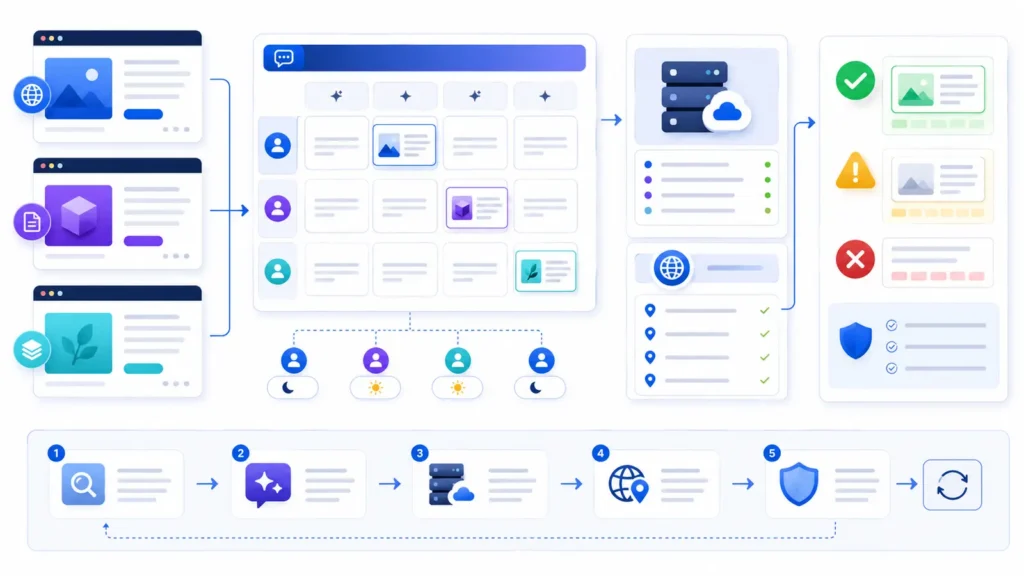
Run the same prompt matrix on a fixed schedule. Do not repeatedly regenerate answers until a desired result appears. Store every observation, including failures. For each response, mark retrieved, found, mentioned, cited, and correct-destination as separate Boolean fields. A first citation is the first dated answer that links to a URL controlled by the studied site.
prompt_id | date | platform | retrieved | mentioned | cited | destination_url | screenshot_idThe primary outcome can be reported as cited responses divided by all scheduled responses. Also report the number of unique prompts producing a citation and the number of unique destination URLs. These denominators prevent one repeated success from looking like broad visibility.
Illustrative before-and-after results
Illustrative data only: The following numbers demonstrate honest reporting format. They are not Visible Pilot client results and must not be reused as a testimonial.
| Metric | Illustrative baseline | Illustrative comparison window |
|---|---|---|
| Scheduled prompt observations | 40 | 40 |
| Successful target-page retrieval checks | 8 of 10 | 10 of 10 |
| Answers mentioning the example brand | 2 of 40 | 6 of 40 |
| Answers citing the example site | 0 of 40 | 3 of 40 |
| Unique prompts with a citation | 0 | 2 |
| Unique cited destination URLs | 0 | 1 |

In this example, the defensible claim would be narrow: the site moved from zero cited answers in the 40-observation baseline to three cited answers in the 40-observation comparison window. It would not prove a permanent ranking, platform-wide inclusion, or a 7.5% universal citation rate.
What likely caused improvement—and what cannot be proven
If the only documented changes were an access fix, a focused evidence page, and stronger internal links, those changes are plausible contributors. The access fix has the clearest mechanism when logs show a previous block and later successful retrieval. Content improvements are harder to isolate because platform indexes, answer systems, competing sources, and model behaviour also change.
The study cannot prove that one heading, schema field, file, or phrase caused the citation. Nor can it show that every AI platform discovers sources in the same way. Correlation becomes more persuasive when the outcome repeats across scheduled tests, the cited page matches the intervention, and control pages remain unchanged.
Evidence and screenshots a publishable case study needs
- Unedited baseline and comparison answer captures with dates.
- The exact cited URL, not merely the brand name visible in an answer.
- Before-and-after retrieval evidence for the same representative URLs.
- A change log showing the page, deployment date, owner, and reason.
- Search or index evidence relevant to the tested platform, without claiming it guarantees citation.
- A public methodology readers can reproduce, plus disclosed exclusions and failed tests.
Privacy can be protected by redacting personal data, authentication tokens, query parameters, and unrelated log entries. Redaction should not remove the evidence needed to verify the conclusion.
Lessons readers can transfer
Start with one problem, one page group, and one measurement protocol. Preserve the baseline before editing. Repair observable access failures before chasing speculative optimization tactics. Give an answer system something worth citing: original data, a reproducible test, a precise definition, or a uniquely useful comparison. Finally, report denominators and failures alongside wins.
Practical rule: If a reader cannot distinguish access, mention, and citation—or cannot see how many attempts were made—the case study is not yet strong enough to guide a business decision.
Common interpretation mistake
The most common error is treating a single generated answer as a stable index position. AI answers are probabilistic and may change between runs. Another mistake is assuming a homepage opening in a user-triggered session proves automatic search discovery. Platform crawlers, user-triggered agents, traditional search eligibility, and citation selection can have different controls and evidence.
Frequently asked questions
How many prompts should a case study track?
Use enough prompts to represent the real customer questions being studied, then keep that set fixed. Ten carefully chosen prompts tested on a schedule are more interpretable than hundreds of changing prompts.
Does crawler access guarantee an AI citation?
No. Access removes one possible barrier. The page must still be discovered, understood as relevant, judged useful, and selected as a source for a particular answer.
Is one citation enough to claim success?
It is enough to record a first observed citation, but not enough to claim stable visibility. Continue the scheduled test and report repetition, unique prompts, unique URLs, and failed observations.
Should a case study compare different AI platforms?
Yes, but results should remain platform-specific. Different systems use different discovery, retrieval, and answer processes, so combine them only in a clearly labelled portfolio summary.
Can structured data create citations?
Structured data can clarify entities and page meaning when it accurately matches visible content, but it is not a citation switch. Treat it as supporting machine readability, not guaranteed placement.
Next step: request a Visible Pilot audit
If your website has no observed AI citations, begin with evidence rather than assumptions. Review why AI search engines cannot find a website and the guide to why ChatGPT cannot read a website, then request a Visible Pilot audit to document access, discovery, content evidence, and a repeatable measurement baseline.
A trustworthy from zero AI citations to first citation case study does not promise a permanent ranking. It shows the exact observation, the denominator, the cited URL, the changes made, and the limits of causal certainty.